
BlogSeptember 7, 2026
How to Structure In-Home Personal Training Sessions
Learn how to structure highly effective in-home personal training sessions, manage client space, and program around equipment limitations.
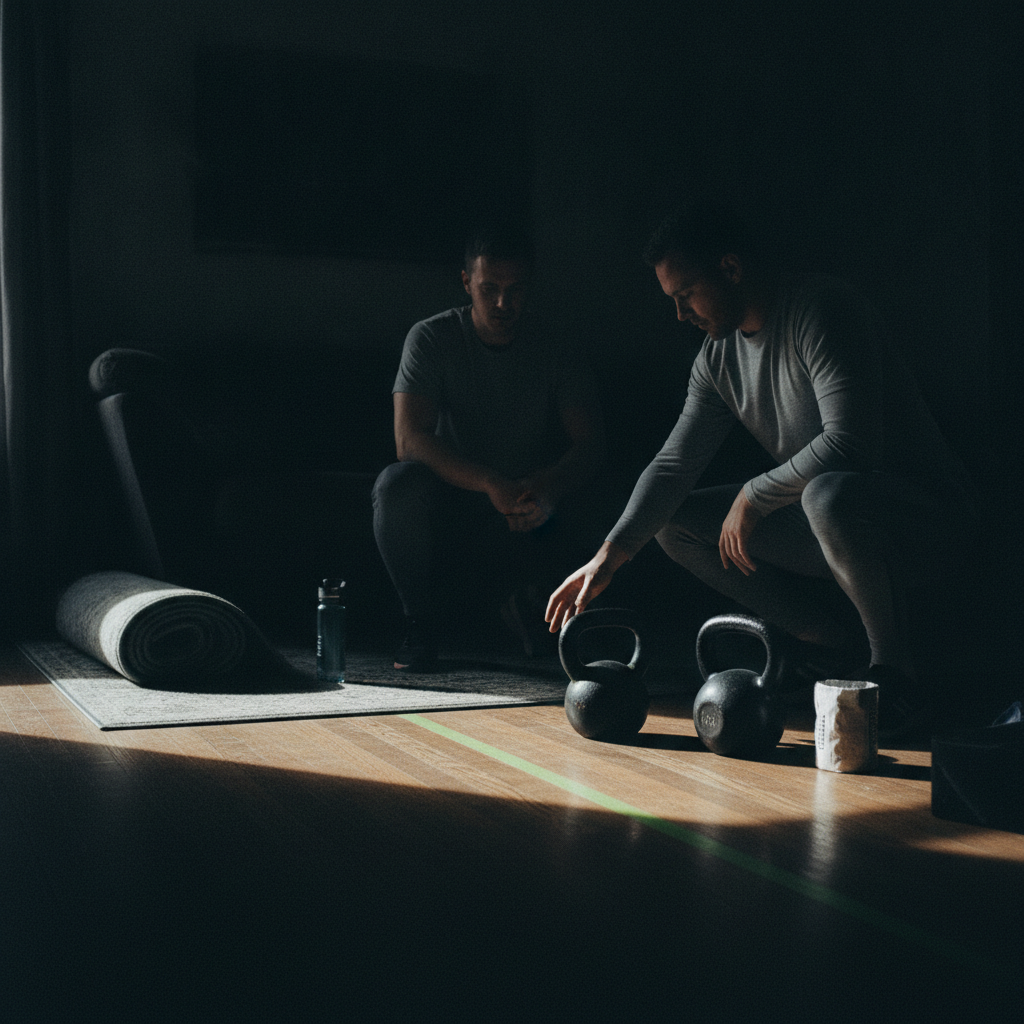
Training clients in their homes is a completely different job than training them on a gym floor. You cannot just copy-paste your commercial gym programming into someone's living room and expect it to work. Success in this niche requires a strict structural framework that respects both the physical space and your client's time.
The minimalist kit
Many coaches make the mistake of turning their car trunk into a mobile commercial gym. They pack adjustable dumbbells, kettlebells, suspension trainers, and half a dozen foam rollers. This is a mistake that will wear you down physically and eat up your valuable transition time between sessions.
My position is simple: bring almost nothing. You should carry a maximum of three items in a single backpack. If a client needs heavy dumbbells, they must buy them.
Here is the exact kit you should carry: - Three loop resistance bands of varying resistance. - Two sliders for lunges and core work. - One suspension trainer that anchors to a door.
The trade-off here is obvious. You lose the ability to do heavy bilateral loading like traditional deadlifts or squats. However, you gain energy, protect your joints from carrying heavy metal up three flights of stairs, and save ten minutes of setup time per session. Your clients will still get excellent results using tempo, unilateral movements, and targeted resistance.
The session timeline
An in-home session must run like clockwork because you do not have the luxury of a front desk to manage the schedule. You must pack up, collect payment, book the next session, and drive to your next client within your designated window.
Use this exact 60-minute breakdown to keep your sessions on track:
1. Minutes 0 to 5: The entry and check-in. Walk in, greet the client, wash your hands, and ask how their body feels. Do not skip the handwashing; it sets a professional tone immediately. Use this time to scan the room for any new hazards like toys or loose rugs.
2. Minutes 5 to 15: The active warm-up. Focus on ground-based mobility and raising core temperature. Use this time to clear a safe training space if the client has not done so already. You can have them perform cat-camels and glute bridges while you slide the coffee table out of the way.
3. Minutes 15 to 45: The strength blocks. Run two distinct supersets or tri-sets. Keep rest periods tight because you are likely using lighter weights and need cumulative fatigue to create an adaptation. For example, pair a single-leg squat with a half-kneeling band press and a plank variation.
4. Minutes 45 to 55: The metabolic finisher. Use bodyweight complexes, kettlebell swings, or high-tempo band work to leave the client feeling like they got a hard workout. Keep the exercises simple so they can maintain good form even when they are tired.
5. Minutes 55 to 60: The exit strategy. Stretch briefly, discuss their homework, book the next session, and walk out the door. Do not linger to chat about their weekend plans; you need to protect your schedule.
This timeline keeps you moving. If you let the initial chat stretch to ten minutes, your entire day will run late.
Control the environment
When you enter a client's home, you are entering their personal sanctuary, but for the next hour, it is your professional workspace. You must establish control of the physical environment immediately to keep the session safe and productive.
Do not be polite about safety hazards. If there is a coffee table in the way, ask them to help you move it.
Follow these three rules for every home you visit: - Establish a pet policy. Dogs will try to lick your client's face during planks or trip you during lunges. Ask the client to put pets in another room before you arrive. - Define the boundary. Pick a specific 10-by-10 foot area and stick to it. Do not wander around the house looking for different spots to do different exercises. - Manage the distractions. Ask the client to turn off the television and put their phone on silent. You cannot compete with a morning news broadcast for their attention.
Program for limitations
You cannot rely on progressive overload through heavy weight plates in a living room. Instead, you must manipulate other variables to make exercises harder without adding external load. This is where your creativity as a coach actually matters.
Focus on mechanical disadvantage and time under tension. A single-leg squat with a four-second eccentric phase will challenge almost any client, even without weights. You can also use 1.5 reps, where the client performs a full rep, goes halfway down, comes back up, and then resets.
Use these programming strategies to maximize limited space: - Emphasize unilateral work. Single-leg deadlifts, Bulgarian split squats, and single-arm floor presses require half the weight of their bilateral counterparts. - Manipulate the tempo. Use slow eccentrics, isometric pauses at the hardest part of the movement, and 1.5-rep schemes to increase the difficulty. - Use mechanical drop sets. Transition from a harder variation of an exercise directly to an easier variation without resting. For example, move from rear-foot elevated split squats straight into bodyweight reverse lunges.
Simplify your admin
Managing a roster of in-home clients means you are constantly on the move. If you are trying to write programs in notebooks, send text messages for bookings, and collect cash at the door, you will burn out.
You need a system that handles your business while you are driving between appointments. This is where an all-in-one platform makes a massive difference.
Using a tool like ProCoach (https://procoachapp.ai) allows you to manage your entire business from your phone. Since there is a free plan to start, you can test these features without any upfront cost. You can set up automated check-ins to see how your clients are recovering between sessions, and use the in-app messaging to keep your personal life separate from work. Clients can book their own slots based on your real-time availability, which eliminates the back-and-forth texting.
You can also send payment links directly to your clients. They can pay securely via Stripe, and you do not have to awkwardly ask for cash or checks at the end of a hard workout. This keeps your sessions focused entirely on training, not on chasing money.
Your next step
Your immediate task is to audit your current mobile training kit. Go to your car, look at the equipment you are hauling around, and remove everything except the essentials.
Call your active in-home clients today and set the expectation for your next session. Tell them exactly what space you need cleared and remind them to keep their pets in another room. Once you establish these boundaries, you will find your sessions run smoother, your clients get better results, and your stress levels drop significantly.